

The Evolution of Orthodontic Treatment and Dental Health
The landscape of orthodontic treatment has transformed considerably over recent decades, with innovations offering patients more choices than ever before. Whilst traditional metal braces have served countless individuals well in achieving straighter smiles, the advent of Invisalign Leicester has introduced a paradigm shift in how orthodontic care intersects with daily oral hygiene practices. The ability to maintain optimal dental health during orthodontic treatment is no longer a compromise but rather an achievable goal for many patients seeking alignment correction.
Understanding the practical differences between fixed braces and removable aligners reveals why so many dental professionals now recommend clear aligners for suitable candidates. The fundamental distinction lies not merely in aesthetics but in the profound impact on a patient’s ability to maintain thorough oral hygiene throughout their treatment journey. This consideration becomes particularly significant when one recognises that orthodontic treatment typically spans many months, during which maintaining excellent dental health remains paramount.
The Hygiene Challenge of Traditional Fixed Braces
Traditional fixed braces present inherent challenges for maintaining optimal oral hygiene. The brackets, wires, and elastic bands create numerous surfaces and crevices where food particles and plaque can accumulate. These components effectively create a maze-like structure around each tooth, making thorough cleaning considerably more difficult than cleaning natural, unencumbered teeth. Patients with fixed braces often find themselves spending significantly more time on their oral hygiene routine, yet still struggling to achieve the same level of cleanliness they enjoyed before treatment commenced.
The complexity of cleaning around fixed orthodontic appliances necessitates the use of specialised tools. Interdental brushes, floss threaders, and orthodontic-specific toothbrushes become essential accessories in the daily routine. Even with these tools and diligent effort, certain areas remain notoriously difficult to access, particularly the spaces beneath the archwire and around the back molars. This accessibility issue can lead to plaque accumulation, which in turn increases the risk of tooth decay, gum inflammation, and the development of unsightly white spot lesions on tooth enamel.
How Removable Aligners Transform Daily Oral Care
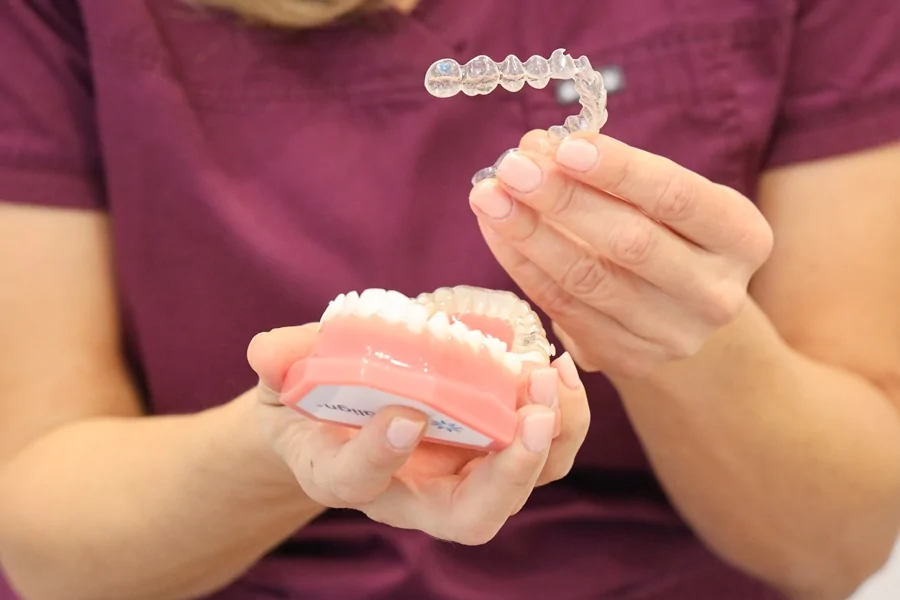
The Invisalign Leicester approach offers a fundamentally different experience when it comes to maintaining oral hygiene during orthodontic treatment. The removable nature of clear aligners means patients can simply take them out before brushing and flossing, allowing complete access to all tooth surfaces without any obstruction. This straightforward removal process restores the oral hygiene routine to its pre-treatment simplicity, eliminating the need for specialised cleaning tools or complicated techniques.
Unrestricted Access to Tooth Surfaces
The ability to remove aligners before meals and during cleaning sessions provides unparalleled access to every tooth surface. Patients can brush and floss exactly as they did before beginning orthodontic treatment, using their familiar techniques without adaptation or additional effort. This unrestricted access ensures that plaque removal remains as effective throughout treatment as it was beforehand, significantly reducing the risk of cavities and gum disease that can sometimes accompany orthodontic intervention.
Furthermore, the smooth plastic surface of clear aligners harbours far fewer bacteria than the complex metal structures of traditional braces. When properly cleaned, aligners present minimal risk of bacterial accumulation. The connection between removable aligners and improved oral health outcomes has been well documented, with studies indicating lower instances of periodontal issues amongst clear aligner users compared to those wearing fixed appliances.
The Impact on Gum Health and Dental Monitoring
Gum health represents another area where removable aligners demonstrate clear advantages. The ability to thoroughly clean along the gumline without obstruction helps prevent gingivitis and more serious periodontal conditions. Traditional braces can sometimes cause gum irritation through bracket placement and wire positioning, whereas aligners sit smoothly against the teeth without sharp edges or protruding components that might irritate soft tissues.
Regular dental check-ups and professional cleanings also become more straightforward with removable aligners. Hygienists can perform thorough cleanings without working around fixed orthodontic hardware, and dentists can conduct comprehensive examinations of tooth surfaces. The future of dental hygiene practices increasingly recognises the value of treatment modalities that support rather than complicate preventive care.
Making an Informed Choice for Orthodontic Treatment
The superiority of clear aligners in facilitating better oral hygiene does not diminish the effectiveness of traditional braces for certain cases. However, for patients who qualify for aligner treatment, the hygiene benefits present a compelling advantage. The health benefits extend beyond aesthetics, encompassing the preservation of dental health throughout the alignment process.
Ultimately, the choice of orthodontic treatment should consider multiple factors, with oral hygiene maintenance being a significant consideration. Clear aligners offer a solution that aligns orthodontic goals with optimal dental health, allowing patients to achieve straighter teeth without compromising their overall oral wellness during the journey.